

Alaska
Alaska
Climbing Rose • Created by Kordes • Germany
Couldn't load pickup availability
In stock
Taxes included. Shipping calculated at checkout.
Minimum order: 2 plants in total. You can mix varieties.
Find out why → Close ↑
Bare-root roses are available to order now. We guarantee growth & variety. Delivery November 2026. Close ↑
Bare-root roses are lifted only after they enter dormancy and the shoots have fully matured and hardened. Lifting them too early can stress the plants and leave young growth insufficiently mature.
We do not force the season simply to ship earlier. We wait for the right point in the plant’s natural cycle, so you receive a strong, well-matured rose ready for planting and the season ahead.
What about colder regions and winter frost?
Waiting until the shoots have fully matured helps the plants enter winter better prepared for low temperatures.
Famous Roses provides a 6 months establishment guarantee for bare-root roses.
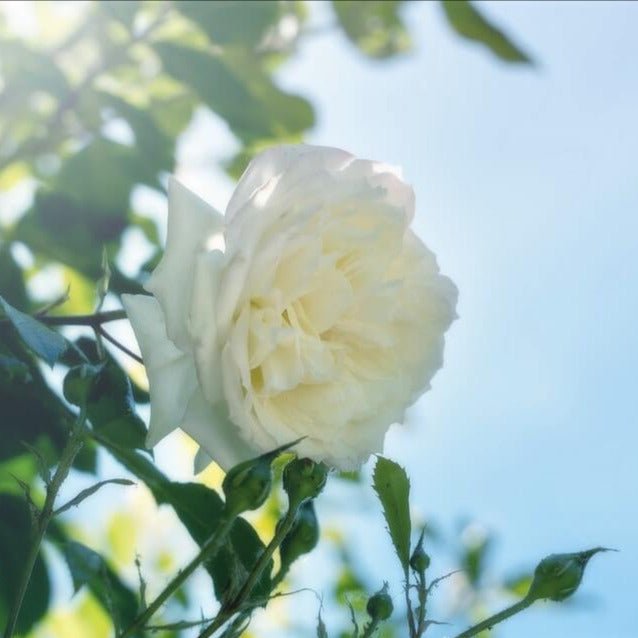
Illuminate an arch, fence or garden wall with Alaska, a repeat-flowering Kordes climber bearing very double, pure-white flowers approximately 8–10 cm across. Reaching around 2 metres, it combines moderate growth, a light fragrance and exceptional disease resistance to bring completion and harmony to vertical garden spaces.
Choose it if you want a manageable white climber with richly petalled flowers, healthy foliage and the reliable performance needed for a long-lasting garden display.
Full Description →
Full Description:
A rose breeder is part gardener, part artist and part patient observer. Years may pass between the first idea and the moment a new rose is finally ready to enter our gardens. Alaska is the result of that devotion: a white climber created to unite romantic flowers with the strength required for modern garden life.
Introduced by W. Kordes’ Söhne in Germany in 2014, Alaska produces very double, pure-white flowers in generous succession. Each bloom measures approximately 8–10 cm and is very double, creating a full, graceful appearance against the green foliage.
Its moderate growth makes Alaska easier to accommodate than many larger climbers. Reaching approximately 2 metres, it is well suited to arches, trellises, fences, pillars and smaller walls where a vigorous four-metre climber could become difficult to control.
The flowers return in repeated flushes throughout the growing season and carry a light fragrance. Their clean white colour brightens shaded-looking structures and combines naturally with almost every garden palette, from soft pastels to deep reds and purples.
Exceptional resistance to common rose diseases is one of Alaska’s defining strengths. Its healthy foliage and dependable flowering make it a reassuring choice for gardeners who want romantic climbing flowers without unnecessarily demanding maintenance.
Trained over a support, Alaska creates the impression of fresh white flowers rising through the garden like snow against summer greenery—a calm and luminous display that returns year after year.
Show less →Characteristics →
Characteristics:
Official name: Alaska® / Future®
Type: Climber
Breeder: W. Kordes’ Söhne
Country of origin: Germany
Introduced: 2014
Colour: Pure white
Flower form: Very double, full flowers
Flower size: Approximately 8–10 cm
Fragrance: Light
Flowering: Repeat flowering throughout the season
Height at maturity: Approximately 2 m
Width at maturity: Approximately 80 cm
Growth habit: Moderate climbing growth requiring support
Foliage: Healthy green foliage
Disease resistance: Excellent
Exposure: Full sun
Planting density: Approximately 1 plant per m²
Use: Arches, trellises, fences, pillars, obelisks, pergolas and garden walls
Recognition: Award-winning variety in international rose competitions
Delivery format: Quality 1+ premium, second-year climber grafted onto a vigorous rootstock
Show less →Frequently Asked Questions →
Frequently Asked Questions:
Are Alaska’s flowers pure white?
Yes. Alaska produces very double flowers in a clean, pure-white shade. Their colour creates a fresh contrast with the green foliage and works easily within almost any planting scheme.
Does Alaska flower repeatedly?
Yes. It produces repeated flushes throughout the growing season rather than flowering only once. Removing faded blooms helps keep the plant tidy and encourages further flowering.
How large are the flowers?
The flowers generally measure approximately 8–10 cm and are very double, giving them a full appearance.
Is Alaska fragrant?
It has a light fragrance. This variety is primarily selected for its abundant white flowers, healthy foliage and dependable garden performance.
How tall does Alaska grow?
It reaches approximately 2 metres, making it a moderately sized climber that is easier to manage than varieties growing three or four metres tall.
Is Alaska suitable for a smaller garden?
Yes. Its moderate growth allows it to cover a compact arch, trellis, pillar or narrow section of fence without overwhelming the available space.
Does Alaska need a climbing support?
Yes. Climbers do not attach themselves naturally, so the stems should be tied to a sturdy arch, trellis, fence, pillar or wall support.
How should I train the stems?
Guide the main stems horizontally or diagonally whenever the support allows. This encourages flowering shoots to develop along a greater length of each cane and creates a fuller display.
Is Alaska resistant to disease?
Yes. Exceptional foliage health is one of its principal qualities. Full sun, good air circulation and watering at soil level will further support clean, healthy growth.
Where should I plant Alaska?
Choose a sunny position with fertile, well-drained soil and a permanent support. Its white flowers are particularly effective against brick, natural stone, dark timber or evergreen foliage.
Can Alaska be grown in a container?
Yes, provided the container is large and deep, has excellent drainage and includes a strong permanent support. Container-grown climbers require consistent watering and regular feeding.
Is Alaska suitable for beginners?
Yes. Its moderate growth, repeat flowering and excellent disease resistance make it a reassuring climber for gardeners with different levels of experience.
How far apart should Alaska roses be planted?
Kordes recommends approximately one plant per m². Adjust the exact position to the width of the structure and the coverage you want.
Which plants combine well with Alaska?
Blue clematis, lavender, nepeta, salvia and pale pink roses create soft combinations. Deep burgundy foliage or red roses provide a more dramatic contrast.
What makes Alaska different from other white climbers?
It combines richly filled pure-white flowers with moderate growth, repeated flowering and exceptional resistance to common rose diseases.
What does the rose look like on delivery?
Its appearance depends on the delivery season and natural stage of growth. For examples and explanations, see What roses look like on delivery →.
What should I do after planting?
Plant it beside a sturdy support, water thoroughly and begin guiding the developing stems as they grow. For detailed instructions, visit our complete planting guide →.
Share