


French floribunda rose bred by Meilland Richardier
Leonardo da Vinci
Leonardo da Vinci
Find out why → Close ↑
Bare-root roses are lifted only after they enter dormancy and the shoots have fully matured and hardened. Lifting them too early can stress the plants and leave young growth insufficiently mature.
We do not force the season simply to ship earlier. We wait for the right point in the plant’s natural cycle, so you receive a strong, well-matured rose ready for planting and the season ahead.
What about colder regions and winter frost?
Waiting until the shoots have fully matured helps the plants enter winter better prepared for low temperatures.
Famous Roses provides a 180-day establishment guarantee for bare-root roses.
Couldn't load pickup availability
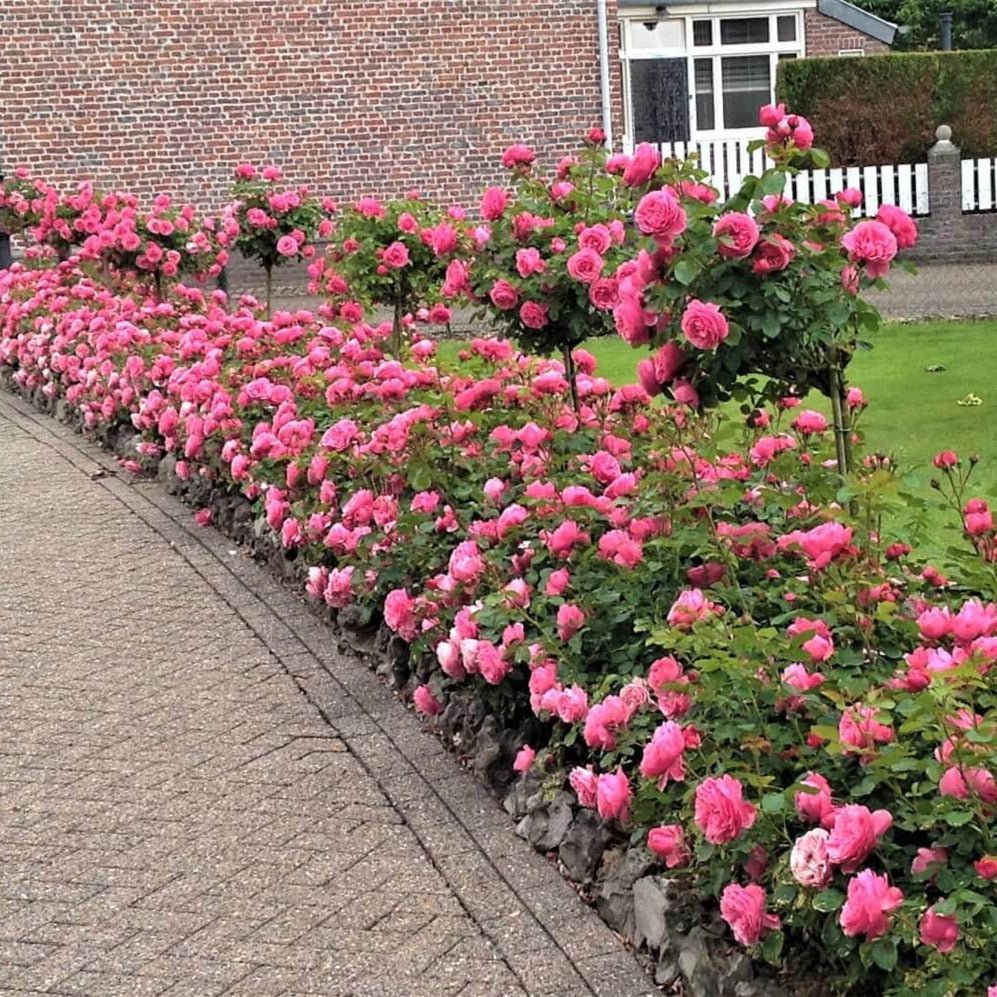
Turn your garden into a living gallery with Leonardo da Vinci, an award-winning Meilland floribunda covered in richly layered Bengal-pink flowers of approximately 75–80 petals. Growing around 70–110 cm, it combines exceptionally abundant repeat flowering, outstanding disease resistance, excellent rain tolerance and a light to moderate fresh fragrance, bringing pride of ownership from late spring until the first frost.
Choose it if you want a romantic pink rose that produces flowers in remarkable abundance while remaining healthy, dependable and easy to use in borders, rose beds, groups and generous containers.
Full Description →
Full Description:
Welcome to the vernissage. The gallery is your garden, the exhibition opens every spring, and unlike paintings hanging behind a cord, these works of art may be touched, smelled and watched as they change from one day to the next.
At the centre of the exhibition stands a living work dedicated to Leonardo da Vinci. It feels an appropriate tribute to a man fascinated by proportion, beauty and the structures of nature: a rose in which dozens of petals come together with almost architectural precision.
Each flower opens in rich Bengal pink, with approximately 75–80 petals forming a deeply romantic, old-fashioned bloom around 8 cm across. The flowers usually appear in small clusters, creating a far more abundant display than their individual size might suggest.
And Leonardo da Vinci seems determined to keep the exhibition open. From late spring until the first frosts, new clusters continually replace the old ones, sometimes covering the compact shrub so generously that flowers appear to outnumber leaves.
Beauty here is supported by remarkable strength. Dense, satin-finished foliage has exceptional resistance to common rose diseases, while the flowers themselves tolerate rain particularly well. This combination makes Leonardo da Vinci as practical as it is romantic.
The shrub reaches approximately 70–110 cm and forms a balanced, well-branched plant suitable for borders, rose beds, low flowering hedges and group planting. Its light to moderate fragrance adds fresh nuances reminiscent of apple and newly cut grass.
International juries have also recognised its qualities, awarding Leonardo da Vinci the Gold Medal at Monza in 1993, certificates at Belfast and The Hague in 1996, another Gold Medal at The Hague in 1997 and Top Rosen recognition in the Netherlands.
Leonardo once searched for the meeting point between art and nature. Centuries later, this rose seems to offer its own answer: a masterpiece that does not hang on a wall, but grows, flowers and begins again every spring.
Show less →Characteristics →
Characteristics:
Official name: Leonardo da Vinci®
Variety code: Meideauri
Type: Floribunda rose
Breeder: Meilland
Collection: Romantica®
Colour: Rich Bengal pink
Flower form: Very double, nostalgic and romantically shaped
Flower size: Approximately 8 cm
Petals: Approximately 75–80
Inflorescence: Approximately 2–5 flowers per stem
Fragrance: Light to moderate
Fragrance character: Fresh notes reminiscent of apple and newly cut grass
Flowering: Very abundant repeat flowering from late spring until the first frost
Height at maturity: Approximately 70–110 cm
Growth habit: Upright, balanced, dense and well branched
Foliage: Dense, satin-finished dark green foliage
Disease resistance: Exceptional
Rain resistance: Excellent
Exposure: Full sun
Planting distance: Approximately 60 cm
Use: Rose beds, borders, group planting, low flowering hedges, specimen planting and large containers
Awards: Gold Medal Monza 1993; Belfast Certificate 1996; The Hague Certificate 1996; Gold Medal The Hague 1997; Top Rosen Netherlands 1997
Delivery format: Quality 1+ premium, second-year rose bush grafted onto a vigorous rootstock
Show less →Frequently Asked Questions →
Frequently Asked Questions:
What colour are Leonardo da Vinci’s flowers?
The flowers are a rich Bengal pink. Their dense petal arrangement gives the colour considerable depth while maintaining the soft, romantic character associated with Meilland’s Romantica collection.
How full are the flowers?
Each bloom carries approximately 75–80 petals, creating a very full, nostalgic flower with the appearance of an old-fashioned garden rose.
How large are the blooms?
The flowers measure approximately 8 cm. They are usually carried in small clusters of two to five, so the overall display can be exceptionally generous.
Does Leonardo da Vinci flower repeatedly?
Yes. Exceptional flower production is one of its defining qualities. It produces successive flushes from late spring until the first frost, giving months of colour rather than a single display.
Is Leonardo da Vinci fragrant?
Yes. The fragrance is light to moderate, with fresh notes reminiscent of apple and newly cut grass. It complements the flowers without overwhelming nearby planting.
How tall does Leonardo da Vinci grow?
It generally reaches approximately 70–110 cm, making it substantial enough to create impact while remaining manageable in most gardens.
Is Leonardo da Vinci resistant to disease?
Yes. Meilland rates its natural disease resistance as exceptional, comparable with some of its strongest landscape roses. This makes Leonardo da Vinci particularly attractive to gardeners seeking reliable foliage as well as abundant flowers.
Do the flowers tolerate rain?
Very well. Rain resistance is one of the variety’s notable strengths, and the densely petalled flowers generally retain their ornamental quality remarkably well during wet weather.
Is Leonardo da Vinci suitable for beginners?
Yes. Its exceptional disease resistance, strong rain tolerance and generous repeat flowering make it a reassuring choice for less experienced gardeners.
Where should I plant Leonardo da Vinci?
Choose a sunny position with fertile, well-drained soil. It performs particularly well in rose beds, mixed borders, low flowering hedges and prominent group plantings.
Can several Leonardo da Vinci roses be planted together?
Yes. Group planting is one of the best ways to use this variety. Three or more plants can create a dense gallery of pink flowers and make its exceptional bloom production even more impressive.
How far apart should the bushes be planted?
Allow approximately 60 cm between plants. This creates a full display while preserving enough airflow to support healthy foliage.
Can Leonardo da Vinci be used as a low flowering hedge?
Yes. Its dense branching, balanced growth and abundant flowering make it particularly effective when repeated along a border or pathway.
Can it be grown in a container?
Yes. Use a large, deep container with good drainage. Its manageable dimensions and abundant flowering make it an attractive choice for sunny terraces and patios.
What awards has Leonardo da Vinci won?
Its international distinctions include Gold Medals at Monza and The Hague, certificates at Belfast and The Hague, and Top Rosen recognition in the Netherlands. These awards reinforce confidence in its combination of beauty, health and garden performance.
How is Leonardo da Vinci different from Red Leonardo da Vinci?
Leonardo da Vinci produces romantic Bengal-pink flowers, while Red Leonardo da Vinci offers deep garnet-red blooms. Both are highly floriferous members of Meilland’s romantic family, making them particularly attractive when planted together.
Which plants combine well with Leonardo da Vinci?
White roses, lavender, nepeta, blue salvia and silver foliage beautifully complement its rich pink flowers. Red Leonardo da Vinci can be added for a deeper, more dramatic interpretation of the same romantic style.
What makes Leonardo da Vinci special?
It combines romantic 75–80-petalled blooms with extraordinary flower production, exceptional disease resistance, excellent rain tolerance and an award-winning record—making it as dependable as it is beautiful.
What does the rose look like on delivery?
Its appearance depends on the delivery season and natural stage of growth. For examples and explanations, see What roses look like on delivery →.
What should I do after planting?
Plant it in full sun, water thoroughly and keep the soil evenly moist while its roots establish. For detailed instructions, visit our complete planting guide →.
Share


This is the second time I have purchased Leonardo da Vinci roses from Famous Roses. They arrived quickly and perfect order and is one of the most breathtaking roses i have seen.
Leonardo da Vinci
- 5 stars: 2 (100%)
- 4 stars: 0 (0%)
- 3 stars: 0 (0%)
- 2 stars: 0 (0%)
- 1 star: 0 (0%)
This is the second time I have purchased Leonardo da Vinci roses from Famous Roses. They arrived quickly and perfect order and is one of the most breathtaking roses i have seen.
Leonardo da Vinci