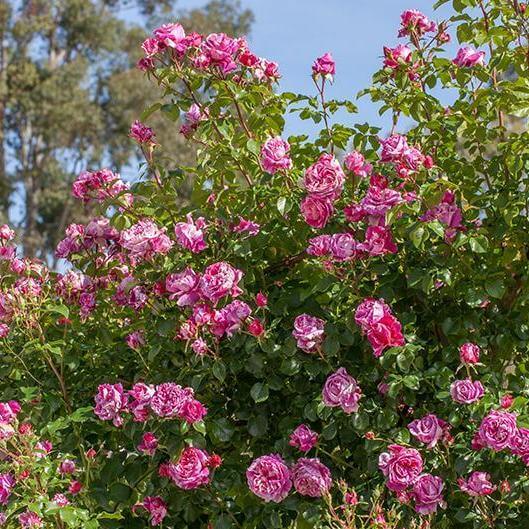


Ines Sastre
Ines Sastre
Climbing Rose • Created by Meilland • France
Couldn't load pickup availability
In stock
Taxes included. Shipping calculated at checkout.
Minimum order: 2 plants in total. You can mix varieties.
Find out why → Close ↑
Bare-root roses are available to order now. We guarantee growth & variety. Delivery November 2026. Close ↑
Bare-root roses are lifted only after they enter dormancy and the shoots have fully matured and hardened. Lifting them too early can stress the plants and leave young growth insufficiently mature.
We do not force the season simply to ship earlier. We wait for the right point in the plant’s natural cycle, so you receive a strong, well-matured rose ready for planting and the season ahead.
What about colder regions and winter frost?
Waiting until the shoots have fully matured helps the plants enter winter better prepared for low temperatures.
Famous Roses provides a 6 months establishment guarantee for bare-root roses.
Give your garden a climbing rose that guests will stop to admire with Ines Sastre, an extraordinary Meilland creation whose large flowers are individually striped and splashed with magenta-pink, white and cream. Reaching approximately 2 m, it combines 100-petalled, approximately 11 cm romantic blooms, generous repeat flowering, exceptional disease resistance and a light fresh fragrance of apple and newly cut grass.
Choose it if you want something genuinely different from a conventional pink climber: no two flowers look quite the same, yet the plant remains vigorous, healthy and manageable enough for walls, arches, trellises and even large containers.
Full Description →
Full Description:
And the Oscar for Best Visual Effects goes to… Ines Sastre, for an extraordinary performance in The Climbing Rose, presented by the House of Meilland.
It would be a fitting award. Named after the Spanish actress and model Inés Sastre, this is a rose that knows how to hold an audience. But its greatest special effect is one that even cinema would struggle to reproduce: every flower is slightly different from the one beside it.
Around 100 petals form large, quartered, old-fashioned blooms approximately 11 cm across. Across them, intense magenta-pink is irregularly painted, striped and splashed with cream-white. Some flowers emerge predominantly pink; others reveal much stronger flashes of cream. Together they create a constantly changing display against glossy dark-green foliage.
And Ines Sastre does not make a brief appearance. Its spectacular first flowering is followed by successive waves throughout summer and into autumn, with flowers appearing in generous clusters. A light, fresh perfume with notes reminiscent of apple and newly cut grass adds another dimension without competing with the extraordinary visual display.
Behind the glamour is a remarkably practical rose. Its foliage offers exceptional resistance to disease, while the plant also has excellent resistance to cold. Flexible stems are relatively easy to guide, reaching around 2 m and making the variety particularly useful for arches, trellises, smaller façades, fences and pillars.
Ines Sastre can even perform on a smaller stage. Its moderate climbing habit makes it suitable for a large container on a sunny terrace or patio, provided it receives a strong support, sufficient root space and regular watering and feeding.
International judges noticed its performance too, awarding it First Prize at Hradec Králové in 2012. But in your own garden, the final vote belongs to your visitors—and with flowers this distinctive, Ines Sastre rarely goes unnoticed.
Show less →Characteristics →
Characteristics:
Official name: Ines Sastre®
Variety code: Meiteratol
Type: Climber
Breeder: Meilland
Named after: Spanish actress and model Inés Sastre
Colour: Magenta-pink irregularly striped and splashed with cream-white
Flower form: Very double, quartered, old-fashioned form
Flower size: Approximately 11 cm
Petals: Approximately 100
Flowering habit: Flowers produced in generous clusters
Fragrance: Light
Fragrance character: Fresh apple and newly cut grass notes
Flowering: Generous repeat flowering from late spring until the first frost
Height at maturity: Approximately 2 m
Growth habit: Vigorous, balanced climber with flexible stems that are easy to train
Foliage: Dense, glossy dark green
Disease resistance: Exceptional
Cold resistance: Excellent
Exposure: Full sun
Use: Walls, fences, arches, trellises, pillars, smaller façades, bouquets and floral arrangements
Award: First Prize, Hradec Králové 2012
Delivery format: Quality 1+ premium, second-year climbing rose grafted onto a vigorous rootstock
Show less →Frequently Asked Questions →
Frequently Asked Questions:
Who is the Ines Sastre rose named after?
The rose is named after Inés Sastre, the Spanish actress and model. Its elegant name suits one of Meilland's most visually distinctive climbing roses.
What colour are Ines Sastre's flowers?
The flowers combine intense magenta-pink with irregular cream-white stripes and splashes. Because the markings vary naturally from flower to flower, every bloom has its own individual pattern.
Do all Ines Sastre flowers look the same?
No—and that is one of the great attractions of the variety. The balance and placement of pink and cream vary between blooms, creating a lively display rather than a perfectly uniform wall of colour.
How large are the flowers?
The blooms reach approximately 10–11 cm across, making them substantial enough to appreciate individually as well as collectively across the climbing plant.
How full are Ines Sastre's flowers?
Exceptionally full. Each bloom contains around 100 petals arranged in a quartered, old-fashioned form reminiscent of historic garden roses.
Does Ines Sastre produce flowers in clusters?
Yes. One of the variety's most impressive characteristics is its ability to produce its large, richly petalled flowers in generous clusters, creating an exceptionally showy first flowering and strong subsequent flushes.
Is Ines Sastre fragrant?
Yes, although fragrance is not its dominant characteristic. The flowers carry a light, fresh perfume with notes reminiscent of apple and newly cut grass.
Does Ines Sastre flower repeatedly?
Yes. After its abundant late-spring display, the plant produces successive flowering waves throughout summer and autumn until the first frosts.
How tall does Ines Sastre grow?
Expect approximately 2 metres at maturity. This makes it substantial enough to create a vertical feature without the difficult-to-control growth of some very large ramblers.
Is Ines Sastre resistant to disease?
Yes. Meilland rates its disease resistance as exceptional. This is an important advantage because the dense, glossy foliage forms a beautiful background to the unusually coloured flowers.
Is Ines Sastre resistant to cold?
Yes. Meilland specifically highlights its excellent resistance to both disease and frost, adding practical strength to its ornamental qualities.
Is Ines Sastre suitable for beginners?
Yes. Its balanced growth, flexible stems, exceptional disease resistance and generous repeat flowering make it a reassuring climber for gardeners who want something unusual without choosing an unnecessarily demanding rose.
Does Ines Sastre need a support?
Yes. Give it a trellis, arch, fence, pillar or wall support and secure the main stems as they develop.
How should I train Ines Sastre for more flowers?
Its flexible branches are particularly easy to guide. Training the main stems horizontally or diagonally encourages more flowering side shoots and can significantly increase the number of blooms across the support.
Is Ines Sastre suitable for a smaller garden?
Yes. Its relatively moderate size makes it particularly useful for smaller façades, narrow trellises, arches and pillars where a much larger climbing rose could eventually become difficult to manage.
Can Ines Sastre grow in a container?
Yes. It can be grown in a very large container if given ample root space, reliable watering and a permanent support. Use a substantial, deep container with excellent drainage and provide permanent support, regular feeding and consistent watering.
Can I use Ines Sastre for bouquets?
Yes. Its striped flowers are particularly attractive in small bouquets and arrangements because every bloom has slightly different markings, creating natural variation even when using flowers from a single rose.
Which plants combine well with Ines Sastre?
White clematis, lavender, nepeta and silver foliage allow its unusual markings to remain the focal point. Deep-purple companions can emphasise the magenta tones, while white planting creates a fresher, more restrained composition.
What makes Ines Sastre different from other climbing roses?
Its combination is unusual: around 100 petals per flower, individually varied pink-and-cream striping, generous clustered flowering, exceptional disease resistance and manageable climbing growth. It delivers the visual drama of a collector's rose without sacrificing practical garden performance.
What does the rose look like on delivery?
Its appearance depends on the delivery season and natural stage of growth. For examples and explanations, see What roses look like on delivery →.
What should I do after planting?
Plant it beside a sturdy support, water thoroughly and begin guiding the flexible main stems as they develop. For detailed instructions, visit our complete planting guide →.
Share