

Floribunda Rose
Burgundy Iceberg
Burgundy Iceberg
Find out why → Close ↑
Bare-root roses are lifted only after they enter dormancy and the shoots have fully matured and hardened. Lifting them too early can stress the plants and leave young growth insufficiently mature.
We do not force the season simply to ship earlier. We wait for the right point in the plant’s natural cycle, so you receive a strong, well-matured rose ready for planting and the season ahead.
What about colder regions and winter frost?
Waiting until the shoots have fully matured helps the plants enter winter better prepared for low temperatures.
Famous Roses provides a 180-day establishment guarantee for bare-root roses.
Couldn't load pickup availability
Sign up for restock notifications
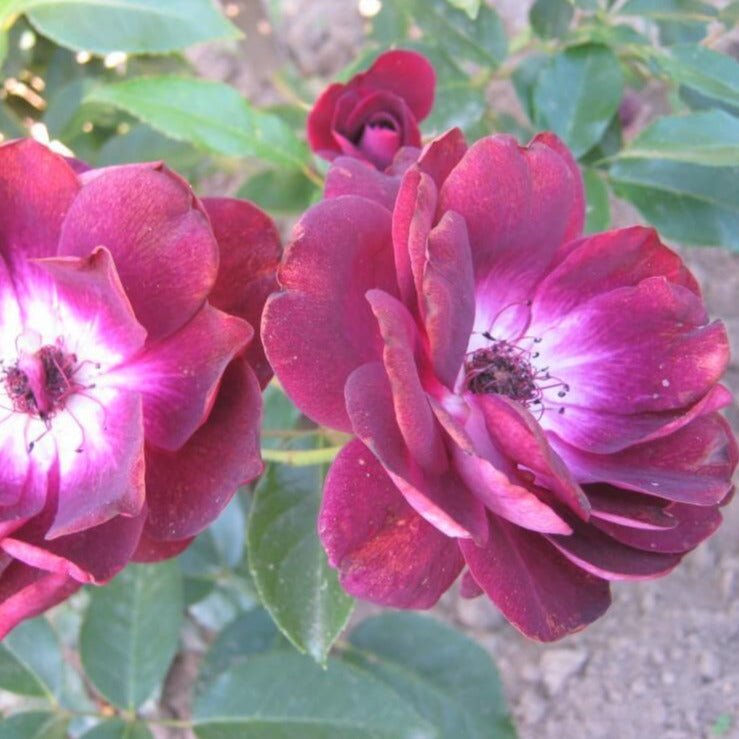
Complete your garden composition with Burgundy Iceberg, a striking floribunda rose whose clusters of deep purple-red and burgundy flowers, pale petal reverses and glossy foliage create a distinctive finishing signature from late spring until the first frost.
Choose it if you want a compact, abundantly flowering rose with dramatic colour, a light honey fragrance and the versatility to enrich borders, groups, containers or a prominent individual position.
Full Description →
Full Description:
A garden can be beautifully planted and still seem to be waiting for one final brushstroke—the detail that turns a pleasing arrangement into something unmistakably personal. With its unusual colour and abundant flowering, Burgundy Iceberg can become that signature.
Its clustered flowers move between deep purple-red, smoky plum and rich burgundy. The lighter reverse of the petals creates contrast as the blooms open and move in the breeze, while burgundy-red stamens become visible at their centres. Cooler weather often deepens the colour, giving the flowers an even more velvety appearance.
Burgundy Iceberg belongs to the celebrated Iceberg family and combines its generous flowering habit with a darker, more dramatic palette. The blooms appear repeatedly from late spring until the first frost, standing out clearly above glossy green foliage.
A gentle honey fragrance can be enjoyed at close range. The plant forms a rounded, bushy floribunda approximately 70–90 cm tall, making it suitable for borders, rose beds, group planting and large containers.
Pair it with white, pale pink, silver or soft green plants for an elegant composition, or with apricot and gold for stronger contrast. Burgundy Iceberg brings depth and individuality—the finishing mark that makes a garden feel truly complete.
Show less →Characteristics →
Characteristics:
Official name: Burgundy Iceberg®
Variety code: PROse
Type: Floribunda rose
Breeder: Ben Swane
Introduced: 2007
Parentage: Colour sport from the Iceberg rose family
Colour: Deep purple-red and burgundy with a lighter petal reverse
Flower form: Double, cupped flowers opening to a relaxed form
Flower size: Approximately 9–10 cm
Petals: Approximately 18–24
Inflorescence: Abundant flower clusters
Stamens: Burgundy-red
Fragrance: Light
Fragrance character: Mild honey fragrance
Flowering: Repeat flowering from late spring until the first frost
Height at maturity: Approximately 70–90 cm
Growth habit: Rounded, compact and bushy
Foliage: Glossy green foliage
Stems: Lightly thorned
Disease resistance: Very good
Exposure: Full sun
Use: Borders, rose beds, groups, specimen planting, low hedges and large containers
Delivery format: Quality 1+ premium, second-year rose bush grafted onto a vigorous rootstock
Show less →Frequently Asked Questions →
Frequently Asked Questions:
What colour is Burgundy Iceberg?
Its flowers combine deep purple-red, plum and burgundy tones with a contrasting pale reverse. The precise balance of shades changes as the flowers mature and with temperature and light.
Does its colour change with the weather?
Yes. Cooler temperatures usually produce the deepest burgundy and purple tones, while warmer weather may give the flowers a lighter or redder appearance.
Is Burgundy Iceberg related to the white Iceberg rose?
Yes. It belongs to the Iceberg rose family and shares its generous flowering habit, but offers a much darker and more dramatic colour palette.
Does Burgundy Iceberg repeat flower?
Yes. It produces abundant clusters in repeated flushes from late spring until the first frost.
Is Burgundy Iceberg fragrant?
It has a light honey fragrance that is pleasant when the flowers are enjoyed at close range.
How tall does Burgundy Iceberg grow?
It generally reaches approximately 70–90 cm and forms a compact, rounded and bushy plant.
Where should I plant it?
Choose a sunny position with fertile, well-drained soil. Its dark flowers are particularly effective near pale companion plants or where they can be viewed at close range.
Can Burgundy Iceberg be planted in groups?
Yes. Three or more plants create a stronger block of burgundy-purple colour and a more impressive flowering display.
How far apart should the plants be spaced?
Allow approximately 50–60 cm between plants so the rounded growth can develop while maintaining good airflow.
Can it grow in a container?
Yes. Use a large, deep container with good drainage and provide regular watering and feeding during the growing season.
Is Burgundy Iceberg suitable for a small garden?
Yes. Its manageable height and compact habit provide abundant colour without requiring the space of a large shrub or climbing rose.
Is it suitable for beginners?
Yes. Its repeat flowering, bushy growth and very good disease resistance make it a rewarding and relatively easy rose to grow.
Which plants combine well with Burgundy Iceberg?
White gaura, pale pink roses, lavender, nepeta, silver foliage and ornamental grasses create an elegant setting. Apricot and golden flowers offer a warmer contrast.
What makes Burgundy Iceberg distinctive?
It combines the generous flowering habit of the Iceberg family with unusual burgundy-purple blooms, pale petal reverses and visible dark stamens.
What does the rose look like on delivery?
Its appearance depends on the delivery season and natural stage of growth. For examples and explanations, see What roses look like on delivery →.
What should I do after planting?
Plant in full sun, water thoroughly and keep the soil evenly moist while the roots establish. For detailed instructions, visit our complete planting guide →.
Share