


Floribundroos • aretaja: Georges Delbard • Prantsusmaa
Dames de Chenonceau
Dames de Chenonceau
Loe, miks → Sulge ↑
Paljasjuurseid roose saab juba tellida ning tarned algavad 26. oktoobril. Sulge ↑
Paljasjuursed roosid võetakse mullast välja alles pärast puhkeperioodi algust ja siis, kui võrsed on täielikult valminud ning puitunud. Liiga varajane väljakaevamine võib taimi stressida ja jätta noore kasvu ebapiisavalt valminuks.
Me ei kiirenda hooaega üksnes selleks, et saaksime varem saata. Ootame taime loomulikus kasvutsüklis õige hetkeni, et saaksite tugeva, hästi valminud roosi, mis on valmis istutamiseks ja eelseisvaks hooajaks.
Aga külmemad piirkonnad ja talvised külmad?
Kui ootame, kuni võrsed on täielikult valminud, lähevad taimed talvele vastu madalateks temperatuurideks paremini valmistununa.
Famous Roses annab paljasjuursetele roosidele 180-päevase juurdumisgarantii.
Järeletulemise saadavust ei saanud laadida
Bring the elegance of the Loire Valley into your garden with Dames de Chenonceau, a romantic Delbard rose bearing generous, very double flowers in delicate shades of soft pink. Its complex fragrance, repeated flowering and graceful presence offer a lasting sense of heritage from spring until the first frost.
Choose it if you want a richly petalled pink rose with a distinctive perfume, manageable shrub growth and enough refinement to become a focal point in a border, rose bed or formal planting scheme.
Full Description →
Full Description:
Dames de Chenonceau is a floral tribute to one of the most graceful landmarks of the Loire Valley. Château de Chenonceau is remembered not only for its Renaissance architecture, but also for the remarkable women who shaped its gardens, interiors and history. This rose reflects that legacy through softness, elegance and quiet strength.
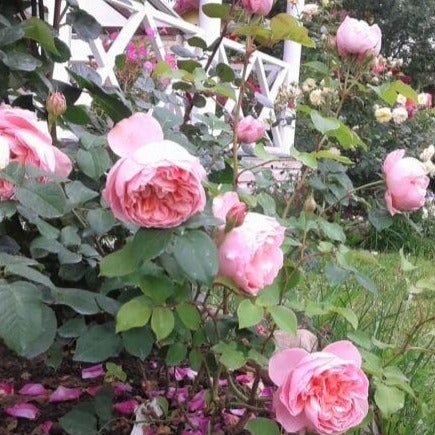
Created by Georges Delbard, it produces large, very double flowers in tender shades of pink. Their full, romantic form recalls the richness of historic garden roses, while the lighter tones bring freshness and versatility to both traditional and contemporary planting schemes.
Its fragrance is unusually complex. Its layered fragrance opens with orange and anise, develops a floral heart of narcissus and settles into a deeper base of leather, civet and watery-fruit notes, completed by a fresh leafy nuance. Planting it near a terrace, entrance or garden path allows this distinctive scent to be appreciated at close range.
Dames de Chenonceau flowers generously in repeated flushes throughout the season. The blooms are displayed against light-green foliage on a vigorous, upright shrub reaching approximately 80–100 cm at maturity.
Its balanced dimensions make it suitable for rose beds, mixed borders and individual planting. Several bushes may also be grouped together to create a fuller, more formal display inspired by the refined gardens of a French château.
The richly petalled flowers can be cut for bouquets and floral arrangements, where their gentle colouring and sophisticated fragrance bring an elegant garden atmosphere indoors. Cut blooms generally remain attractive for approximately five days in a vase.
Show less →Characteristics →
Characteristics:
Type: Floribunda
Breeder: Georges Delbard
Introduced: 2002
Colour: Soft, delicate pink
Flower form: Large, very double and romantically shaped
Fragrance: Complex and richly layered
Fragrance notes: Orange, anise, narcissus, leather, civet, watery fruits and fresh leaves
Flowering: Generous repeat flowering from spring until the first frost
Height at maturity: Approximately 80–100 cm
Growth habit: Vigorous, upright and bushy
Foliage: Light-green foliage
Disease resistance: Good
Exposure: Full sun
Plant spacing: At least 50 cm
Hardiness: Approximately -20°C once established
Soil: Adaptable, with rich well-drained soil preferred
Use: Rose beds, mixed borders, group planting, specimen planting, bouquets and floral arrangements
Cut flower performance: Approximately 5 days in a vase
Delivery format: Quality 1+ premium, second-year rose bush grafted onto a vigorous rootstock
Show less →Frequently asked questions →
Frequently asked questions:
Why is this rose called Dames de Chenonceau?
It was created as a tribute to Château de Chenonceau in the Loire Valley and to the influential women who shaped its history. Its refined flowers evoke the elegance and romantic character associated with the château.
What colour are the flowers?
The blooms are soft pink, with gentle variations in tone that emphasise their full, romantic form.
What does Dames de Chenonceau smell like?
Its complex fragrance opens with orange and anise, moves through narcissus, then deepens into leather, civet and watery-fruit notes with a fresh leafy finish. The perfume is distinctive without losing the refinement expected from a classic pink rose.
How strong is the fragrance?
The fragrance is richly layered and is best appreciated when the rose is planted near a terrace, doorway, seating area or frequently used path.
Does Dames de Chenonceau flower repeatedly?
Yes. It produces generous flowering flushes throughout the season rather than offering only one display.
How tall does the rose grow?
It reaches approximately 80–100 cm at maturity, forming a vigorous but manageable shrub.
Where should I plant it?
Choose a sunny position with fertile, well-drained soil. It works beautifully in a dedicated rose bed, a mixed border or as an individual specimen in a prominent position.
Can I plant several bushes together?
Yes. Planting three or more bushes together creates a fuller display and allows the soft-pink flowers to make a stronger visual impact.
Is it suitable for a smaller garden?
Yes. Its height of approximately 80–100 cm provides a substantial floral display without requiring the space of a large shrub or climbing rose.
Can Dames de Chenonceau be grown in a container?
It can be grown in a large, deep and well-drained container. Container-grown roses require consistent watering and feeding because their roots have access to fewer natural resources.
Is Dames de Chenonceau suitable for beginners?
Yes. Its vigorous growth, repeat flowering and manageable size make it a rewarding choice when planted in full sun and given regular watering, feeding and seasonal pruning.
Is it resistant to disease?
It is considered a healthy and resistant rose. Full sun, good air circulation and watering at soil level will help maintain clean foliage throughout the season.
Can the flowers be used in bouquets?
Yes. Their full form, delicate pink colouring and sophisticated fragrance make them particularly suitable for romantic bouquets and refined floral arrangements.
How long do the cut flowers last?
The flowers generally remain attractive for approximately five days in a vase when cut as the buds begin to open and placed promptly in fresh water.
Which plants combine well with Dames de Chenonceau?
White roses, lavender, nepeta, blue salvia and silver foliage complement its gentle pink flowers. Deep burgundy foliage can provide a more dramatic contrast.
What makes this rose special?
It brings together historic inspiration, very double romantic flowers, an unusually layered fragrance and repeat flowering in a shrub of practical garden size.
What does the rose look like on delivery?
Its appearance depends on the delivery season and natural stage of growth. For examples and explanations, see What roses look like on delivery →.
What should I do after planting?
Plant in full sun, water thoroughly and keep the soil evenly moist while the roots establish. For detailed guidance, visit our complete planting guide →.
Jaga


Roos oli ideaalselt pakitud ja juured olid suurepärases seisukorras. See on istutatud maasse ja väikesed lehed on juba ilmunud.
- 5 stars: 1 (100%)
- 4 stars: 0 (0%)
- 3 stars: 0 (0%)
- 2 stars: 0 (0%)
- 1 star: 0 (0%)
The rose was perfectly packagedand the roots awere in excellent condition. It's planted in the ground and small leaves have already appeared.