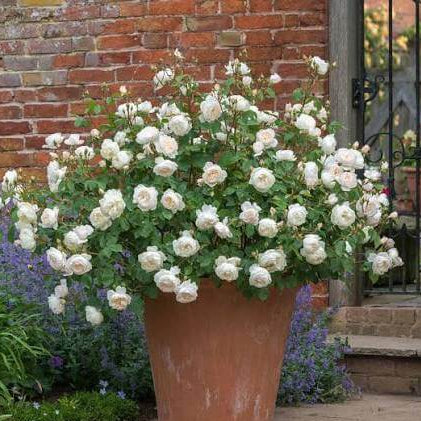


Grmasta vrtnica • žlahtnitelj: David Austin • Anglija
Desdemona
Desdemona
Preberite, zakaj → Zapri ↑
Vrtnice z golimi koreninami lahko naročite že zdaj, dostave pa se začnejo 26. oktobra. Zapri ↑
Vrtnice z golimi koreninami izkopljemo šele, ko preidejo v mirovanje in so poganjki povsem dozoreli ter oleseneli. Prezgodnje izkopavanje lahko rastline obremeni, mladi poganjki pa lahko ostanejo premalo dozoreli.
Sezone ne prehitevamo samo zato, da bi lahko odpremljali prej. Počakamo na pravi trenutek v naravnem ciklu rastline, da prejmete močno, dobro dozorelo vrtnico, pripravljeno na sajenje in prihajajočo sezono.
Kaj pa hladnejša območja in zimska pozeba?
Če počakamo, da poganjki povsem dozorijo, rastline vstopijo v zimo bolje pripravljene na nizke temperature.
Famous Roses za vrtnice z golimi koreninami zagotavlja 180-dnevno jamstvo za uspešno ukoreninjenje.
Razpoložljivosti prevzema ni bilo mogoče naložiti
Prijavite se na obvestila o obnovi zalog
Create a sense of quiet luxury with Desdemona, a David Austin English Shrub Rose whose peach-pink buds open into luminous white, chalice-shaped flowers with the faintest blush at first. Strongly fragrant with classic Old Rose perfume enriched by almond blossom, fresh cucumber and lemon zest, it forms a neat rounded shrub of approximately 110 × 110 cm and flowers repeatedly from late spring into early winter.
Choose it if you want an elegant white rose with exceptional fragrance, balanced growth and enough versatility for borders, groups, containers, hedging and cutting.
Full description →
Full description:
Desdemona has the kind of beauty that becomes more compelling the closer you look. At first glance it is a white rose of remarkable purity. Then the details begin to appear: peach-pink buds, the faint blush of a newly opened flower and petals curving inward to create subtle patterns of light and shadow.
Bred by David Austin and introduced in 2015, Desdemona was named after the heroine of Shakespeare's Othello. The name suits a rose whose character feels delicate and poetic, yet whose garden presence is composed and assured.
The buds begin in soft peachy pink before opening into white, chalice-shaped blooms. During the earliest stage of flowering, a gentle pinkish hue can remain within the petals before gradually fading, leaving the flowers increasingly luminous as they mature.
The incurved petals are one of Desdemona's most distinctive visual qualities. They create a delicate interplay of shadow and light within each flower, giving the bloom depth even though its palette is restrained.
Fragrance is equally important. The strong Old Rose perfume carries unusual fresh details of almond blossom, cucumber and lemon zest. The result is rich without feeling heavy, combining the romance of an old-fashioned rose scent with a crisp freshness that makes the flowers especially rewarding at close range.
Plant it beside a path, terrace, entrance or seating area and the fragrance becomes part of everyday garden life. Cut a few stems for indoors and that same perfume can fill a room.
Desdemona forms a neat, rounded and bushy shrub approximately 110 cm high and 110 cm wide. Its balanced shape makes it easy to use in a rose bed or mixed border, as a low flowering hedge, in a group of three or more plants, or in a generous container.
Flowering is repeated in generous flushes from late spring through to early winter under suitable conditions. That long season of bloom, combined with its fragrance and compact growth, makes Desdemona particularly valuable where one rose needs to contribute beauty for months rather than weeks.
Some white roses create formality. Desdemona creates atmosphere: pale flowers, changing blush tones and a fragrance that makes you slow down each time you pass.
Show less →Characteristics →
Characteristics:
Official name: Desdemona®
Variety code: Auskindling
Type: English Shrub Rose
Breeder: David Austin
Country of origin: United Kingdom
Introduced: 2015
Named after: Desdemona, the heroine of Shakespeare's Othello
Colour: White, opening from peach-pink buds with a soft pink blush in the early stages
Flower form: Chalice-shaped, with gently incurved petals
Flower size: Medium, approximately 5–9 cm
Fragrance: Strong
Fragrance character: Old Rose with almond blossom, fresh cucumber and lemon zest
Flowering: Repeat flowering from late spring through to early winter
Height at maturity: Approximately 110 cm
Width at maturity: Approximately 110 cm
Growth habit: Neat, rounded and bushy
Exposure: Full sun
Aspect: Suitable for east-, south- or west-facing positions
Soil: Suitable for a wide range of soil types when well prepared and adequately drained
Use: Mixed borders, rose beds, groups, low flowering hedges, large containers and cutting
Delivery format: Quality 1+ premium, second-year rose bush grafted onto a vigorous rootstock
Show less →Frequently asked questions →
Frequently asked questions:
Is Desdemona a pure white rose?
Mature flowers are predominantly white, but the buds begin in peachy pink and newly opened blooms can retain a soft pink blush. The colour gradually fades as the flower matures.
What shape are Desdemona's flowers?
The flowers are chalice-shaped, with petals curving gently inward. This creates the light-and-shadow effect that gives the blooms much of their distinctive character.
How large are the flowers?
David Austin classifies Desdemona as a medium-flowered English Rose, with blooms generally around 5–9 cm across at their prime.
Is Desdemona strongly fragrant?
Yes. David Austin rates its fragrance as strong, and scent is one of the variety's defining qualities.
What does Desdemona smell like?
Its perfume has a classic Old Rose character enriched by almond blossom, fresh cucumber and lemon zest, giving it both depth and freshness.
Where should I plant Desdemona to enjoy the fragrance?
Place it close to a terrace, garden seat, entrance or frequently used path where the flowers can be appreciated at close range.
Does Desdemona repeat flower?
Yes. It produces successive flushes from late spring through to early winter under suitable conditions, giving a long season of flowers.
How large does Desdemona grow?
David Austin gives an established size of approximately 110 cm high and 110 cm wide, creating a balanced, rounded shrub.
Is Desdemona suitable for a smaller garden?
Yes. Its compact and symmetrical dimensions make it easier to place than a broad or vigorous shrub rose.
Can Desdemona be grown in a container?
Yes. David Austin recommends it for pots and containers. Use a large, deep container with good drainage and provide regular watering and feeding.
Can Desdemona be planted as a hedge?
Yes. Its rounded, bushy habit and repeat flowering make it suitable for a low informal flowering hedge.
Can several Desdemona roses be planted together?
Yes. A group of three or more creates a stronger mass of white flowers and intensifies the fragrance around the planting area.
Is Desdemona suitable for cutting?
Yes. David Austin specifically recommends it for cutting, and its white flowers and complex fragrance make it especially attractive in simple garden bouquets.
Which plants combine well with Desdemona?
Lavender, nepeta, blue salvia, silver foliage and soft pink roses all complement its white flowers beautifully. Burgundy foliage creates a more dramatic contrast.
Why was the rose named Desdemona?
It was named after Desdemona, the tragic heroine of Shakespeare's Othello, continuing David Austin's tradition of naming roses after literary characters.
What makes Desdemona different from other white English Roses?
Its appeal lies in the combination of peach-pink buds, luminous chalice-shaped white flowers, a strong Old Rose fragrance with unusual almond, cucumber and lemon notes, and a neat rounded habit.
What does the rose look like on delivery?
Its appearance depends on the delivery season and natural stage of growth. For examples and explanations, see What roses look like on delivery →.
What should I do after planting?
Water thoroughly after planting and keep the soil evenly moist while the roots establish. For detailed instructions, visit our complete planting guide →.
Delite